Cometary Tales Secrets of the Grand Canyon It’s All About the Sand

It’s All About the Sand

OK, Time for Our First Entry in SECRETS REVEALED!!!

#1  It’s All About the Sand

Approaching a Grand Canyon rafting trip, all you think about are those thrilling rapids, the blazing sun, and the electrifying/drenching thunderstorms. Your packing list is heavy on waterproof gear, quick-drying clothing, sunblock, and hats.  But at least half of your time is spent in the Kingdom of the Sand Demon, and you will be reminded of that for weeks to come, as you find sand in yet another impermeable item.

Think of it this way:  the glistening white sand beaches along the Colorado River are formed of particles eroded from a mile of rock—much of it sandstone, no less, and almost all of it the product of eons of marine sedimentary deposition—with the grinding-down happening over five or six million years.  All those thousands of thousands of years of tumbling in the river yields sand so fine that it blows right through your tent walls.  Yes, really.  You will snuggle down to sleep in your little tent with the windows and doors zipped tight (because you did notice all that sand out there and were even sharp enough to notice that the wind tends to shift its direction and roar turbulently down the canyon every evening).  And you will wake up with a layer of dust-scale sand all over your gear, your sleeping bag, your mat, and your face.

Yes, beautiful sandy beaches!

Yes, beautiful sandy beaches!

So—once you think about it, there is no mystery.  Ultrafine sand plus forceful winds equals sand in everything.  Most of the time it is a minor annoyance, an opportunity to bond with your travelmates: “Yep, I have sand in my beer/cocoa/coffee/soda/water, too.” Sometimes, it’s just another technical chore, such as brushing the sand out of your waterproof camera housing.  But sometimes, it’s a way to mark yourself as a seasoned river-runner:  the clean, safe water supply at Phantom Ranch was “turbid” (nanoscale sand, yes?) when we stopped by—so Billie advised the crew to pump water through the team’s super-filters for refills, instead of simply using the Park Service’s ready-to-use water, in order to avoid giving the new arrivals an unpleasant surprise on their first day.  We old hands merely filled our bottles at the tap and chugged the wetness gratefully.

On occasion, it’s more than annoying (see my Day Two Morning whine-session).   To quickly recover from the more-than-annoying times, bring the following:  an eye cup and a tube of liquid tears.  If you have any dry-eye issues, make sure to bring your medication.  If your weight allowance allows, tuck in a bottle of pH-balanced eyewash.  If you don’t need these supplies, fine.  But if someone else does, you will make a friend for life!

And to save those supplies for being a hero, apply an ounce of prevention.  If you’re a side-sleeper, face away from the tent walls.   Tuck a headband in your gear—if you find yourself waking up with sand in your face, use the headband as a night-time eye covering and wash your face in the morning.  Shake the sand out of your sleeping gear before packing it away in the morning.  Try to keep your hands reasonably clean—humans are always putting their fingers in their eyes, but you sure notice it more when you rub sand into them!  And if you must sleep under the stars, tent-free, choose a less-comfortable spot out of the sand-blow.  (You’ll realize the guides don’t concern themselves with tents—but they are usually bunking down on their boats.  On the water.  Away from the sand.)

Keep in mind, this is no excuse to Avoid The Trip.  Just one of the Secrets they don’t tell in the literature.  To paraphrase one of Clark’s favorite poets, Robert W. Service, “It isn’t the river ahead that wears you out; it’s the grain of sand in your eye”.

Want to read the real quote, and more?  A good place to start is Goodreads.  Yes.  Pun intended.

And remember, add $10 to your budget for:

A proper eye cup.  Bring your old glass version if you have one--this the the best out there now.

A proper eye cup. Bring your old glass version if you have one–this is the best plastic one.

adforeyewash

Kinder than water and sand-free.

liquidtears

Helpful dose for irritated eyes…not the stinging “red out” stuff.


You might also like to read:

Day Zero: Get Thee To FlagstaffDay Zero: Get Thee To Flagstaff

There is no simple way to orchestrate the travel here.  Yes, planes fly to Flagstaff, not the same airlines as fly to the big airports but their small-scale partners.  There’s a shuttle bus from Phoenix, and if you were facing a long layover the van could even be faster.

A view of the Grand Canyon we did not see on our flights (courtesy of Google Earth)

But we arrive in Phoenix with plane tickets in hand and actually welcome a half-hour flight delay, because it allows us a chance to buy lunch.  I even have time for a stroll through the overpriced-souvenir shop, where I hand over $2 for a pair of elastic bands someone in the shop has put out to support a fundraiser for improving water supplies in Haiti.  Seems appropriate. And the chance to put up our feet for a half-hour is welcome, as we’re already tired.  We actually began yesterday, on Day “-1”, with a five-hour drive to rendezvous with Clark’s friend, who lives near Reno, so we could all travel together the whole way.  Our Day Zero expedition consisted of a drive from the pine forests of Plumas County to the desert flats of Reno’s outskirts, a freeway jaunt to the airport (chauffered by another friend), a big plane to Phoenix, a little plane to Flagstaff, then a search for the airport shuttle.  We will have a powerful case of deja vu on Day Fourteen.   You’ll see.

Flagstaff’s airport is a fabulous, small airport.  My favorite kind.  One baggage claim zone.  No trouble meeting a shuttle bus right outside.  As it happens, the other folks sharing the van are another couple going on our trip.  And they have obtained an intelligence report from the rafting company, OARS, that we five will be the only “guests” staying on the raft trip for the full fourteen days.   The rest of the group will leave halfway (and hike out), to be replaced by a new batch of folks for the second week.  So we will actually get to spend a full fifteen days with Todd and Eliza.  Oh, yeah, and until such time as the members of our trip group authorize me to use their names, I will be using fake names, just in case I goof up and say something upsetting or someone turns out to be in Witness Protection.  I won’t do the same for the crew, since I want to actually give them the props they deserve.  In fact, I’d hope this whole piece could be considered a humungous letter of reference for each and every person on the crew.  I’d initially given myself permission to use my own and my husband’s names, but he protested, so here goes.  He is herewith dubbed “Clark”.  And what to call Childhood Friend?  How about Lana?  And surely that makes me “Lois”.  The only funny thing about this, is that I actually have a friend called Lois–so, hey, Lois, you can tell people this is you.  (Fair warning, though, I’m not the heroine of this story!)

The key element of Day Zero is the evening briefing from the Trip Leader.  We gather in one of the Radisson Hotel’s conference rooms.   (The Midway guests also will have a briefing, but not by the Trip Leader , as she will be a mile downhill at the time.)  So we meet our first authentic River Guide.  This is Billie Prosser, who’s been whitewater rafting since she was a teenager, over fifteen years now, much of that time in the Grand Canyon.  These days, she chooses to do only a few of these Grand Canyon trips a year, giving herself the chance to work on other rivers and also to have time for a private trip, as time permits, to enjoy the Canyon without having to take care of people like us.

At the meeting, we also get our first glimpse of our fellow travelers all together.  We are heavily loaded with Californians and Canadians.   There are three women from Canada—their menfolk didn’t want to come.  There’s two father-son duos: one a dad and his athletic teenager, the other a Bechtel project technician taking a voluntary layoff to make the trip with his dad, a (putatively) retired actor and writer.  The Fab Five (Todd & Eliza and the three of us–Lois, Clark, and Lana) are all from California.   The actor, who takes care during the meeting to firmly establish that he’s the most-senior member of the troupe, has also brought along a childhood friend—a woman he hadn’t seen since high school.  While he keeps us entertained, I get the vague feeling he sort of expects someone to recognize him.  Then there’s another triad…a husband and wife and one of their friends.  Is that sixteen?

We get a quick summary of what to expect in the morning.  The crucial item is to have our gear packed and in the lobby by quarter to seven and be ready to leave by seven.  There’s a little last-minute advice on what to be sure to bring.  In case something’s been forgotten, there’s a WalMart in walking distance.  We’re advised to bring lots and lots of moisturizer.  I ask for a definition of “lots”, which it seems is a 16 oz bottle per person per week.  Oh, my goodness, I didn’t bring that much, so we have a trip to WalMart in the plans already.  We’re issued our “drybags”, each labeled with our own personal real names.  (Amazingly, they don’t know to use the fake names I will make up in the future for this blog.)  And Billie gives us a five-minute seminar on how to seal the drybags.  This is important, as all of our clothing and personal items go in this bag, which will then be tied onto a raft and frequently doused with water.  We’re each also issued a small drybag.  The big bag is inaccessible except in camp.  The day bag serves to keep dry what we need to keep dry but have access to during the day.  And we’re allowed to bring whatever we like in our daypacks as well, provided we understand that these will get drenched in larger rapids or if it rains.  The drybags don’t have our personal names on them.  Instead, they each have an identifying name written in Sharpie,  to individualize them.  We just each have to remember our bag’s name.  Mine is “Turpentine Broom”.  Lana’s is “Grease Bush”.  And Clark selects the distinctly memorable “#73”.  Mine is the best.  Here is all about Turpentine Broom  and Grease Bush.  I expect we’ll encounter these plants on our journey.  In the meantime, the names help, as the bags come in only a few colors.

I’m relieved to hear there will be a bag for boots, as this will make room in my kit for all that moisturizer.  Others are relieved to hear that their beer and wine orders have been filled.  Some are anxious to double-check on that after the meeting.  Billie has the checklist.  Evidently, this is a common anxiety.

Then we are off to WalMart.  Yes, our first act upon crossing the moment into our trip environment is to walk down a suburban city street, past a dark and quiet Home Depot, an active supermarket, and a Bank of America with lights glowing invitingly above its ATM, to shop in the megabehemoth of a store that was launched just a few miles from Clark and Lana’s home town.   But oh, they do indeed have It All.  More sunblock.  I must have more sunblock.  Moisturizer, per Billie’s recommendations.  Handy dry facewash cloths to get all that sunblock off.  And a tripod.  What was I thinking, leaving home without a tripod?  And a little mini flex-tripod for Clark.  Sweet.  Now all we have to do is haul this all back to the hotel and get everything crammed into our bags.

And, well, the bag-cramming takes a little while.  Maybe more than a little while.   Part of it is deciding which things are OK in the backpack (maybe in a Ziploc bag, maybe not), which need to go in the daybag, and which can be done without and stuffed in the main drybag.  I have the extra variant that I really have 2 daypacks. One is a one-shoulder sling pack that keeps my cameras and other hiking essentials from bearing down on my healing shoulder and when not in use tucks into the main pocket of my large daypack.  The main daypack takes my raingear, a dry set of fleece sealed in ziplocs, my tripod, and other handy items.  It’s big, it’s bulky, I will make Clark carry it as much as possible.  But it all fits.  And while I fancy myself adept at this sort of thing, it is Clark who is already proving to be better at sealing the big drybag.  He says it is just that he can squish it down better, being a bit heavier, but I think there is more to it than that.  I will keep insisting on doing my bag myself for about four more days.  Then I will give up and let him do it for me.

One last shower and a thorough hair washing.  It will be 2 weeks without a shampooing, at least for me.  I do not want to look at the setting on the alarm clock.  It is just too awful to contemplate.


Secrets and Mysteries of Rafting the Grand CanyonSecrets and Mysteries of Rafting the Grand Canyon

So, for the next month and more, this blog, or at least most of its available posting space, has been claimed by a fan of the Grand Canyon.  Yes, a fan of a really big hole in the ground.  It’s not as big as Valles Marinaris, but there is still a river at the bottom of the Grand Canyon, which greatly facilitates travel by river raft.  The goal is to take you along on a fourteen-day expedition, from Kaibab Sandstone to Vishnu Schist, through rapids, slot canyons, waterfalls, and thunderstorms, and along the way reveal a few of the deep dark secrets of these trips so few of us take.  We’ll cover over 180 miles on the river plus many miles afoot on canyon trailways.  Why use up a month to take you on a two-week trip?  Because that’s what it feels like.  You forget what day it is, how long you’ve been gone, how much time is left.  If you don’t keep a journal, you’re lost.

I kept a journal.

I also took about 3,000 photographs and an hour of video.

Yes, there will be a fair amount of “what we did”, but I also want to share the background information the guides (and other travelers) shared with us, the additional tidbits I’ve gleaned from research (the addiction of the Ph.D.), and perhaps even paint the picture well enough that if you can’t go on this trip you can claim you did and provide your friends with a verisimilitudinous description.  Just pick one of the falsified names in the diary segments & say “yeah, that’s me”.   Also, if you’re a well-heeled adventure traveler planning your own expedition, I’d hope you’ll come away with enough information to know where you should not take short-cuts—and with some clues about how to find experienced, capable guides to get you through safely.

In the meantime,  I don’t want to wear out your eyeballs with more than a few photos and a thousand words of gushing per post.  There will be directions to see more photos, but, I promise, this won’t be a session of “Watch my Vacation Slideshow”.

Time for the first installment of Secrets of Grand Canyon River Rafting.

Deep, dark secret #1.  Not everyone wants to go on this trip.  Three husbands who could have joined their wives refused the chance to walk away from work, television, and electronic connectedness for a week.  A young backbacker—who had completed the climb of Mount Whitney with his mother just a few months previously—turned down a free ticket and sent his retirement-age Mom on her own.  She said he didn’t like the idea of not being in control on the trip.  Another traveller’s wife sent him off with a (female) friend he’d recently reconnected with after a thirty-year hiatus, because the wife just can’t stand camping.  His son, a golf enthusiast, only agreed to chaperone them if they took the shorter trip, to be sure he’d be home in time to watch the Master’s.  Me? No, actually, I didn’t want to go on this trip.  The only person who couldn’t tell was my husband, he was so excited about going.  Why would this nature/science/ancient-peoples-loving photographer want to sit this out?

First of all, it’s frightfully expensive—if you want to travel the Canyon and not spend a fortune, you need to be able to work there.   I am not the correct age or physical type to start a new career as a river guide.  Nor do I have the right background or training to get hired by (or even volunteer for) the Park Service or any of the scientific research teams with feet on the water down there.  So when my husband Clark declared that it had “always” been his wish to make this trip and that he had, after all, a big landmark birthday coming up, I made him pay for it out of his IRA.  That was the only place we had enough money set by.

Second, Clark got the idea from a friend of his, a childhood friend who’s facing the same landmark birthday this year.  When these two get together, they tend to devote a significant amount of our time to recalling those good-old-days.  Days I did not share.  Oh, great, my jealous heart predicted:  two weeks of traipsing along behind while they play “remember when.”  Well,  I did end up trailing along behind, but not quite the way predicted.  You’ll see.

And the third and most sensible reason:  I broke my shoulder in January and my orthopedist’s solid opinion about my going river-rafting in April was: “I wouldn’t recommend doing that.”   The bone knitted on schedule, but shoulders are complicated messes of tendons and muscles that don’t take kindly to the whole process.  I was told it would be a year or more before I’d be back from this injury.  My physical therapist did what he could to get some of my range-of-motion restored and added a couple of exercises to build back a little strength, but I went off with one arm fully-qualified to hang on tight and one that complained bitterly about any extension beyond a basic stretch while it simply refused to raise my hand beyond about 80 degrees.   One upside was that Clark got to haul all my gearbags, because I just couldn’t handle them.

The other upside is that I would not want to have missed out on this trip.  Even though we couldn’t afford it, it was worth it.  Does that make any sense at all?  Well, it will.

So, all right already, let’s go.  For a teasing sneak-peek, here is a picture from Day 5.  Oh, aye, it’s the Grand Canyon.

Day One

Day Two, Afternoon: From 20 Mile to Lone Cedar CampDay Two, Afternoon: From 20 Mile to Lone Cedar Camp

We have been encouraged to shift about and ride with all of the guides, as each has different perspectives, stories, and expertise.  Still, Clark needed to simplify things this morning and so re-joined Christian in the sweep boat.  And it happens that Eliza and Todd also jumped back on the same boat as yesterday.   Smart move for them, as I was OK with staying in the back all day to deal with my sand-in-eye issue, so they got a full day up front.   This will set a new pattern for our partners in the Fab Five, as, with the possible exception of Lana, we’re all keen to ride up front as much as possible.  So our couples will be endeavoring to not ride too much as a foursome, as each pair wants the same seats as the other!

Today, plunging deeper into the canyon forces us to expand our minds in the geological direction as well.   As the day began, we felt ourselves all knowledgeable, having mastered the notion of a “formation”, that is, a group of rocks that is readily distinguishable from layers above and below.  Our first formation was the Kaibab Limestone so naturally we thought  a “formation” meant a layer of one type of rock. But then we had to come to terms with the Toroweap layer, sandwiched between the Kaibab Limestone and the Coconino Sandstone.  But that middle layer has three main types of rocks—and no one is calling it the “Toroweap Gypsum and Shale and Sandstone”, it’s just the “Toroweap Formation”.

Toroweap Formation first appears below the Kaibab

Toroweap Formation first appears below the Kaibab Limestone

The point is a formation has a recognizable structure that geologists use to build their maps and that even we non-geologists can spot as a distinct layer.  Its main observable characteristic is it seems more bust-up-able, so the Toroweap also introduced us to talus slopes.  Turns out the gypsum and shale are more susceptible to erosion, so the transition between Kaibab and Coconino is a sloping mess of tumbled and jumbled rock, providing footholds for vegetation and for wildlife.  The Hermit Shale, underneath the Coconino, also turns out to be a slope-forming layer.  So we are sometimes going past vertical walls but sometimes alongside rocky slopes hosting vegetation—and wildlife.


Big Rock Slide

One Big Rock Slide–from the Kaibab over the Toroweap talus slope to drop off the Coconino wall to the Hermit shale slope

Well, we thought we were so smart, but our comeuppance struck earlier this morning, when we descended below the Hermit Shale into something entirely new.  The Supai Group.  What the heck is a “group”???   Is this some kind of pun on “rock group”?  Are we supposed to be asking which layer plays “bass”?  Naw, it’s just that sometimes geologists find it helpful to describe an assemblage of formations as a “Group”.   There are four formations (is that another pun?) in the Supai—and we will have rolled through all of them by dinnertime.    Why “Supai”?  That’s the name of the people who live in the Grand Canyon, the members of the Havasupai Tribe.  Not coincidentally, “Coconino” is the old Hopi name for the Havasupai.  So far, the geologists seem to have been relying on the locals to come up with formation names—Kaibab and Toroweap are Southern Paiute words, which are usually translated as “mountain lying down” and “dry/barren valley”, respectively.   We’ll learn about the “Hermit” moniker later.

With all these complex rocks in the vicinity, after lunch we make a short run to a place for a hike.  We pull in at Upper North Canyon Camp…no, not to camp, instead to make the scramble up to the North Canyon pool.  It’s a try-out, Billie says, to see how the group fares on hikes involving some scrambling.  I’m having something of a relapse in my eye condition, so I (yeah, yeah, grumpily) stay behind to take care of that.  I like scrambling, but it’s not a good idea when you can’t see.  Meanwhile, Christian is also on break, left behind to keep an eye on the boats and any stay-behind passengers.  I think I’m the only one staying.  Oh, well.

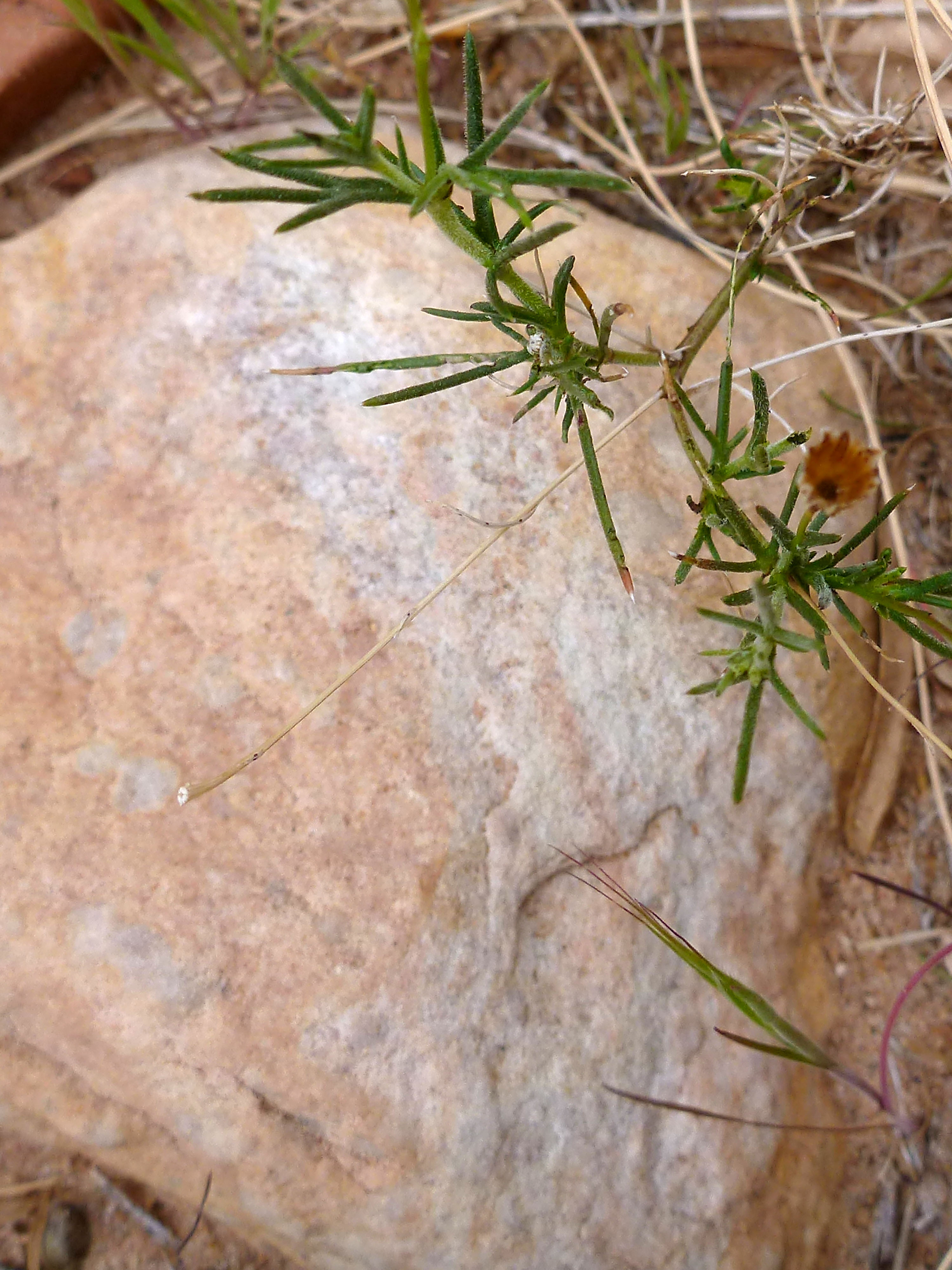
When my eye is feeling better again,  I let Christian know I’m going to roam about in the area near shore, with my camera in hand.   It’s actually a relief to have a little time seemingly “on my own”.  (This has to go in quotes…there are tons of people around, no fewer than a dozen at any given time, as other groups leave and arrive from the river, or from up-canyon.)  I just ignore everyone else and find for myself some photogenic calcite lumps, fire ants, lizards, a garden of native plants (agave, prickly pear, and more), and a spot to video the rapids.

Rafting the Grand Canyon, April 2013, Day 2

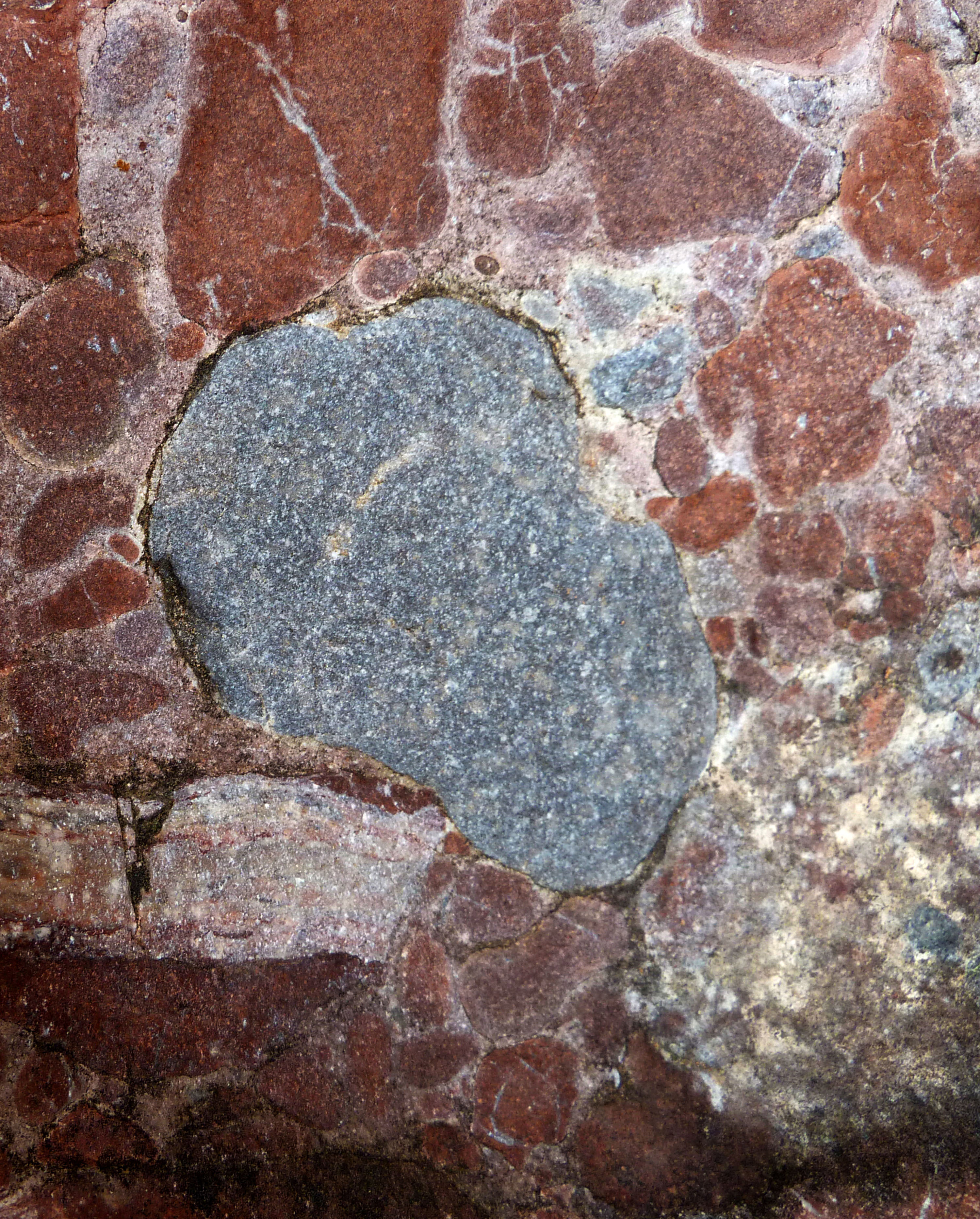
Heart of Stone

Rafting the Grand Canyon, April 2013, Day 2

White Rock & Friend

Rafting the Grand Canyon, April 2013, Day 2

Spray and Moss

Rafting the Grand Canyon, April 2013, Day 2

Grand Canyon Fire Ants with Straw

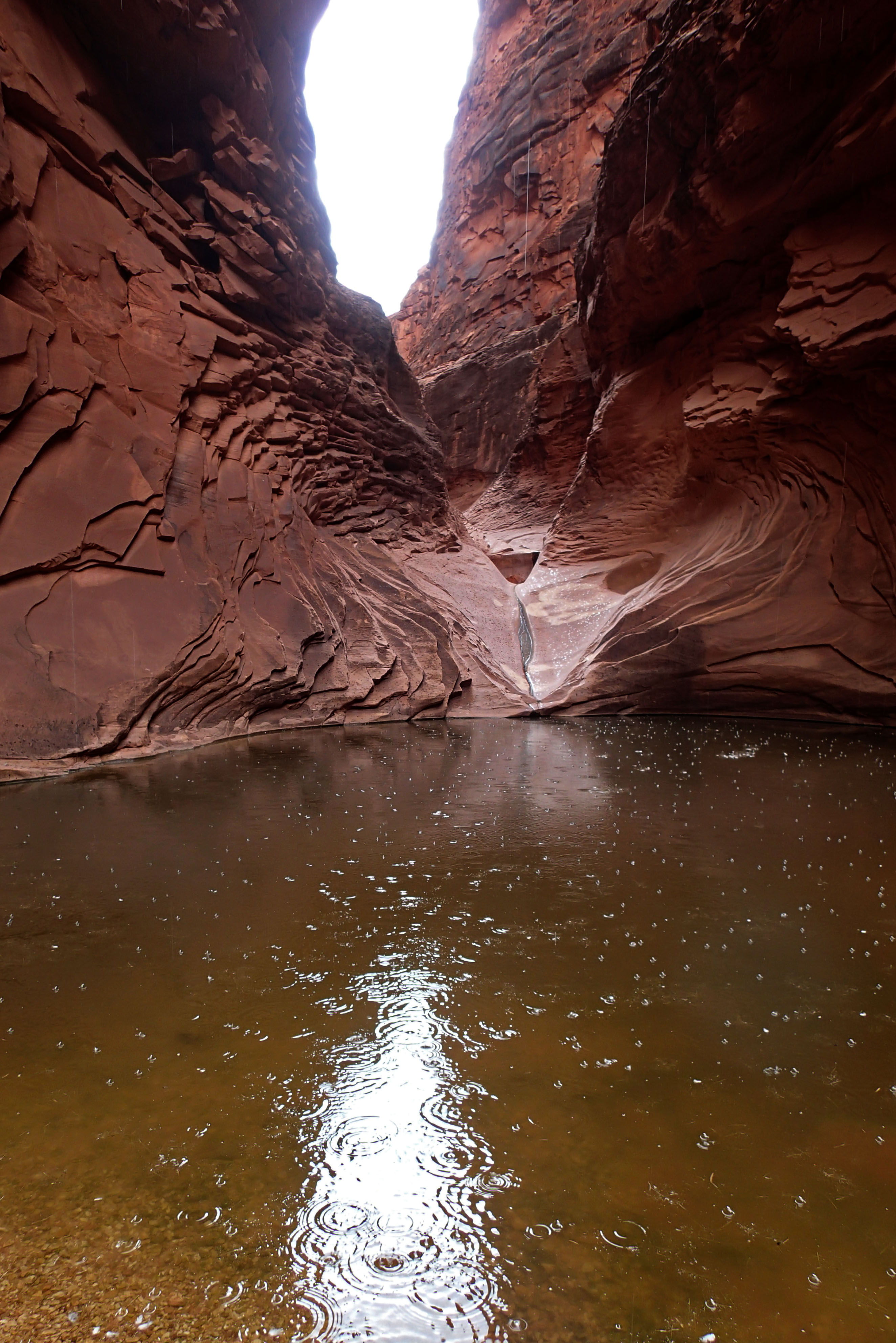
Rainfall at North Canyon

Rainfall at North Canyon


It is an effort to ignore just how popular this spot is.   I’ve already learned to be careful setting up a shot when folks are first pulling in to shore.    The very first thing guys do after shipping oars—whether they’re wriggling out of a kayak or beaching a raft– is stand up and urinate.  Another reason to roam a bit away from the beach.

Rafting the Grand Canyon, April 2013, Day 2

Arrivals at North Canyon

While I may have enjoyed my little wander and my personal discoveries, I did miss the adventure of the day, so here are a few of Clark’s pics from the Reason So Many People Stop Here:

Rafting the Grand Canyon, April 2013, Day Two

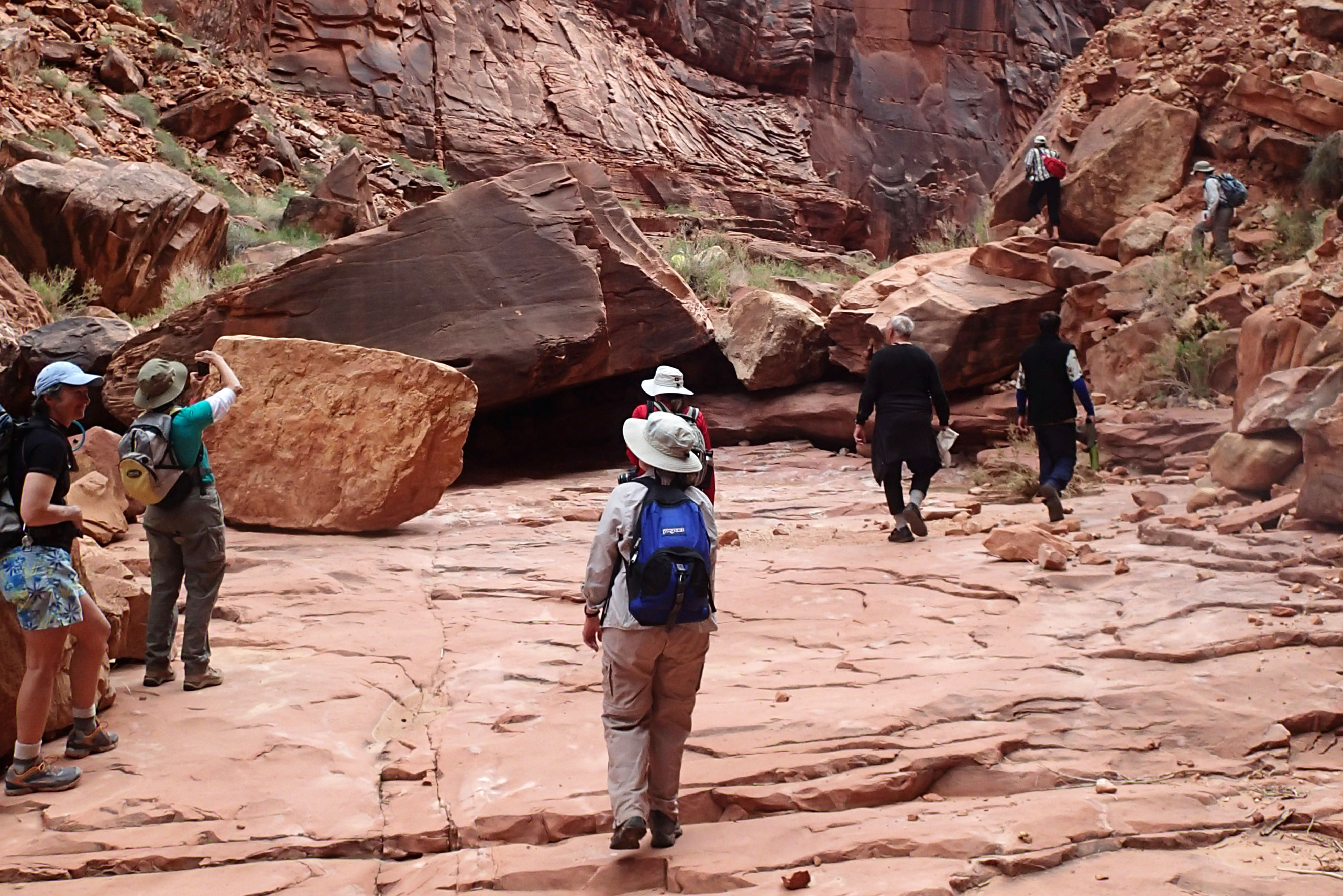
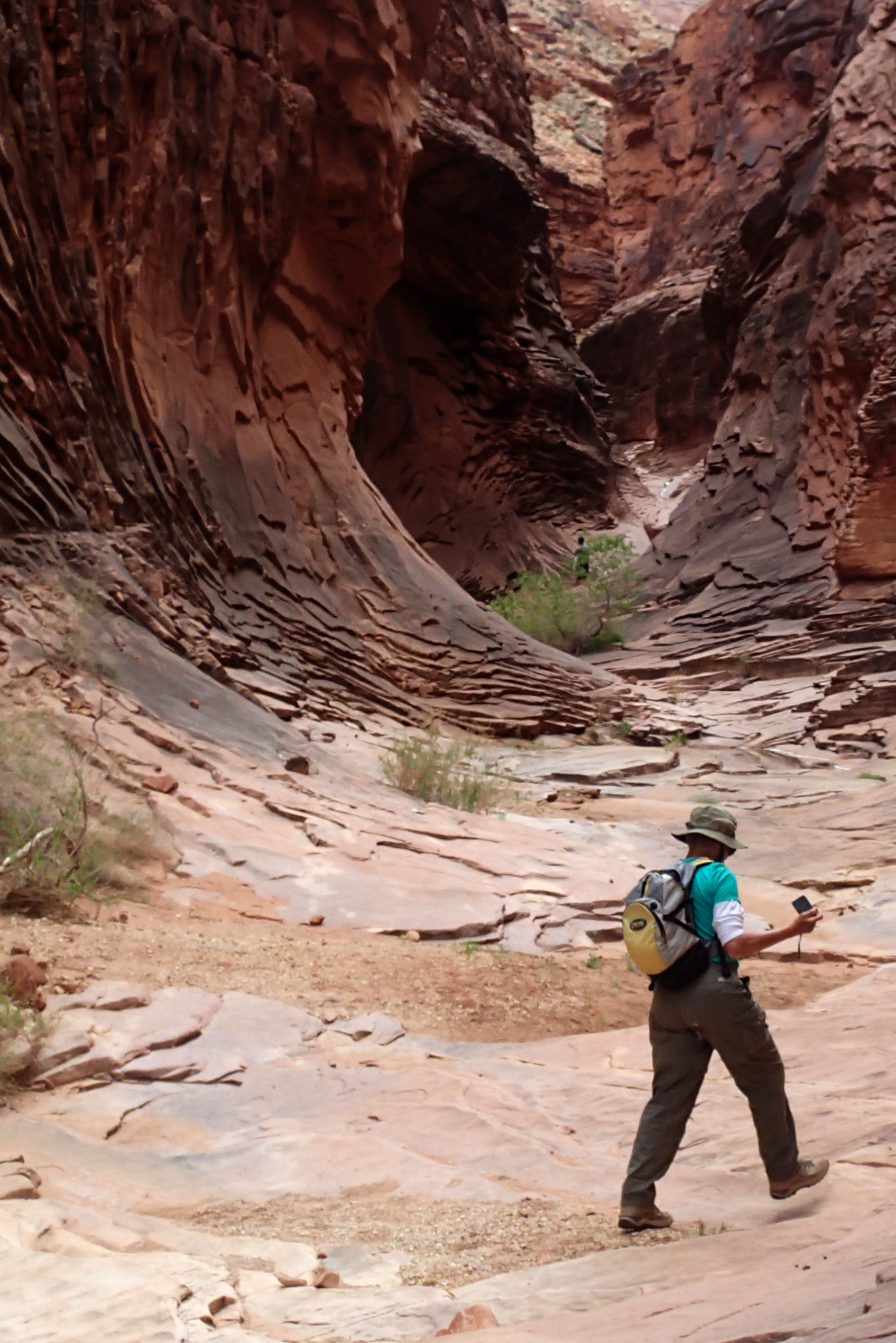
Billie leads the group up North Canyon

Rafting the Grand Canyon, April 2013, Day Two

Florence heads up the drainage.


Rafting the Grand Canyon, April 2013, Day Two

Tiny reflecting pool


Rafting the Grand Canyon, April 2013, Day Two

The main pool, in the rain


It’s not far to camp, but it’s a fun ride.  We’re now in the “Roaring Twenties”, a sequence of lively rapids between the 20-mile and 30-mile rivermarks.    At camp, another benefactor appears.  Trillian (of the triad Art & Trillian & Barry) has a solid familiarity with the trials of irritated eyes, as she suffers with one of those ailments that interferes with tear production, so she shares a pair of vials of her prescription Restasis.  I was a little skeptical about “borrowing” a prescription medication, but it turns out to be just the right thing.

Another lovely freshly-prepared dinner.  This time, it’s grilled chicken—with a choice of sauces.  Clark is ecstatic.  I think he goes back for seconds.  Matt works out his golf technique with the help of some driftwood.  Like Clark, he’s looking forward to the Master’s this coming weekend;  unlike Clark, he will be at home in time to watch the whole tournament.

During dessert, the portable grill becomes a firepit for our circle of chairs.  TitleThe crew breaks out some toys—horseshoes and a set of glow-in-the dark bocce balls.  Everyone is in the mood for some relaxation.  I’m in the mood for taking more pictures.

We made over close to 20 miles today (even with that annoying person whining in the back of the sweep boat).  We’re having wonderful weather.  A little drizzle during the hike just added a little variety without causing any problems for anybody.   We’ve stopped at Lone Cedar Camp, which is big enough for folks to spread out a bit.  Our tent is tucked into the lee of a large rock, and I persuade Clark to try putting up the flysheet tonight (the excuse being it might rain again).  The combined effect is to reduce somehat the quantity of sand infiltrating our tent this time.

Wishing I owned a sleep mask—or that I’d happened to pack one of my several headbands—I fashion an eye covering from a spare pair of long johns (well, let’s say “elegant thermal underlayer”) which serves to keep my head warm in the night and to keep the Restasis (and the extra tears it produces) in and to keep the sand out of my eyes.  At least no one at all can see how silly I look—Clark is already fast asleep.


© 2012-2026 Vanessa MacLaren-Wray All Rights Reserved